Re: [Therion] new Therion 6.0.5

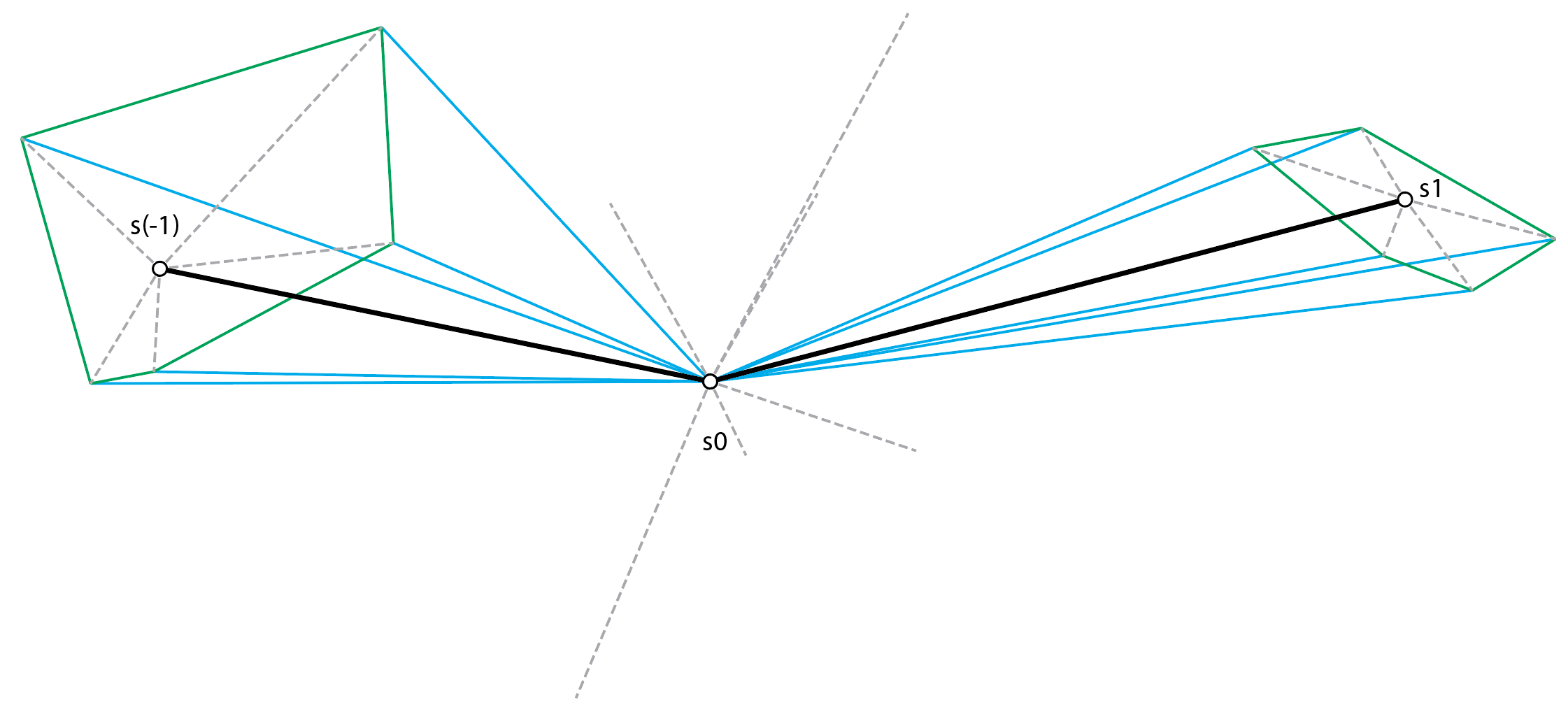
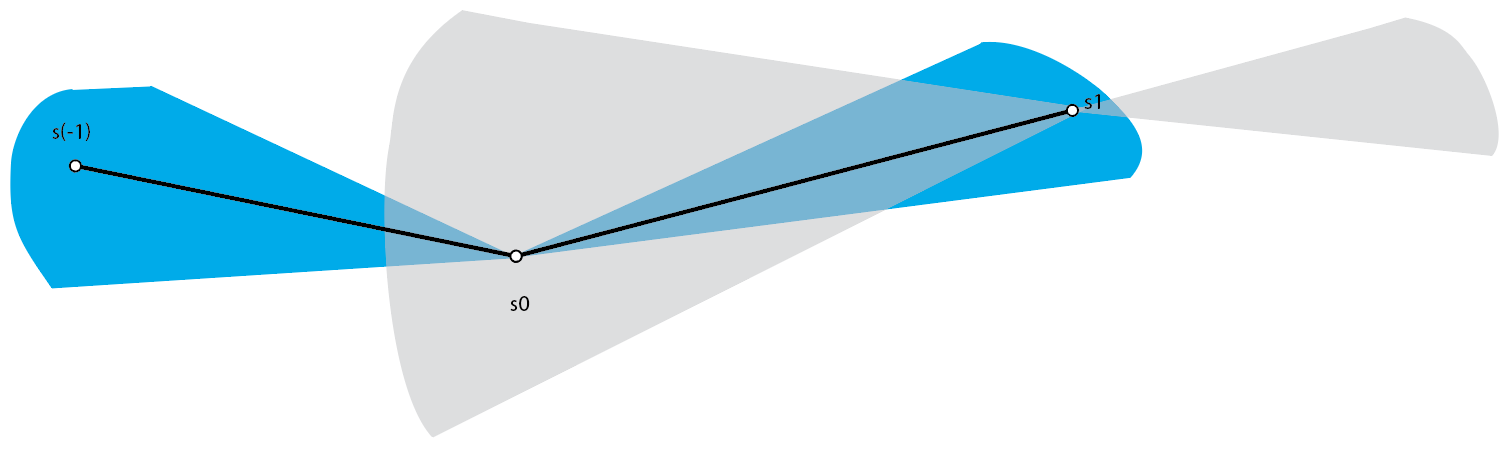
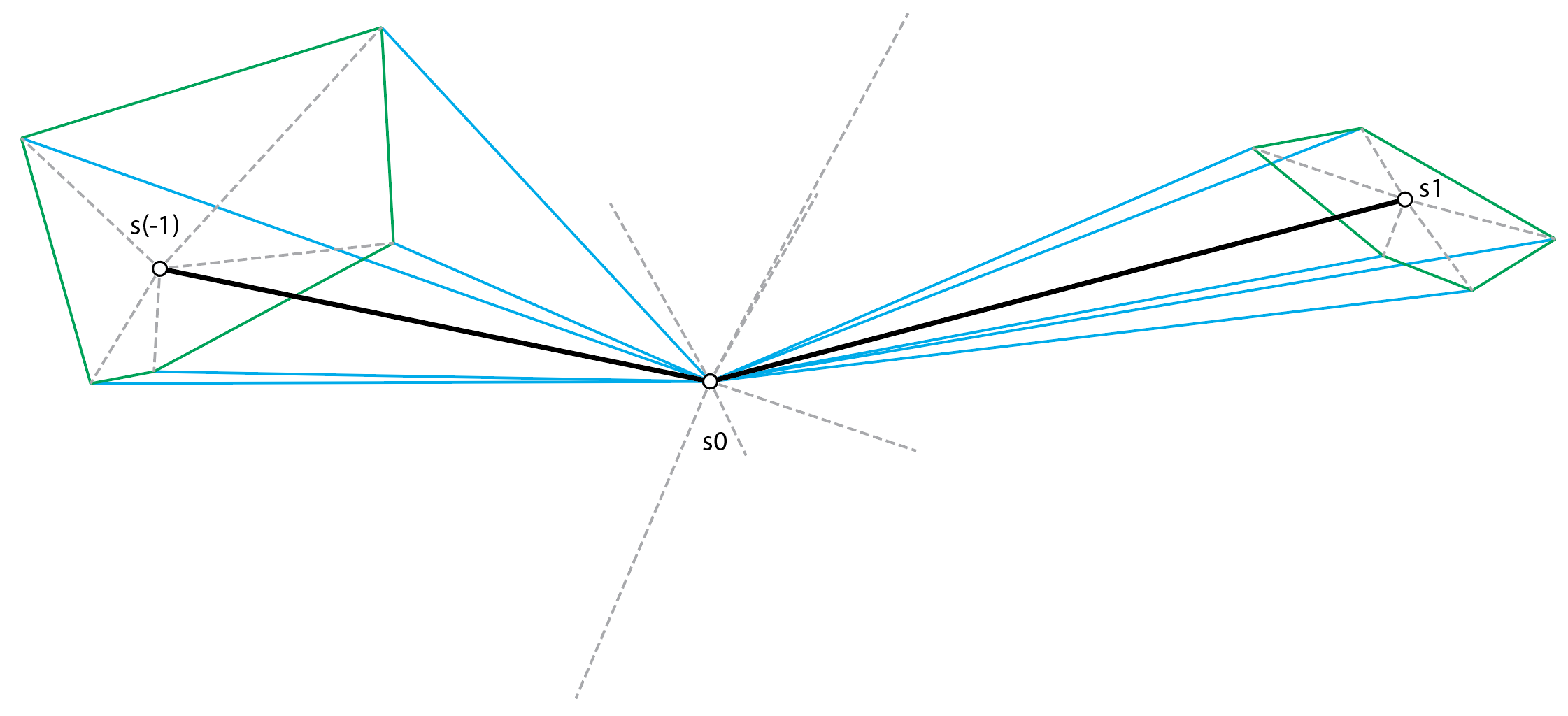
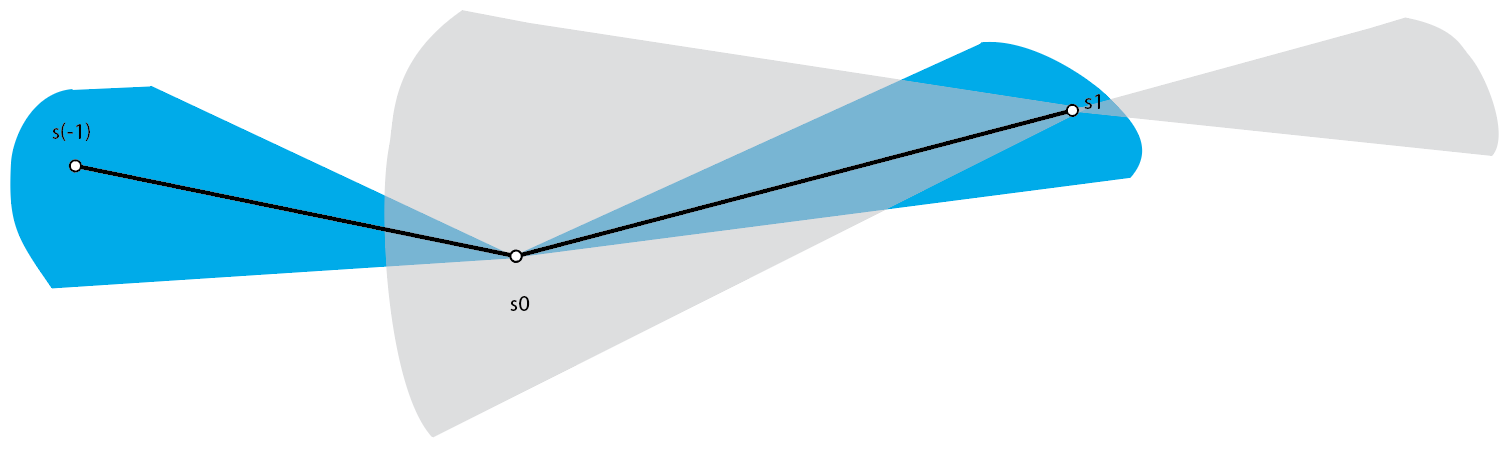
Hi, Thank you for the very useful "volume statistics" tool! I was wondering: how is the volume computed in Loch? Looking at Loch-generated models in Paraview, it seems to me that Loch creates the volumes by joining every station to the splays radiating from the previous and next stations, creating a sequence of pyramid-like solids, like in this schematics: [image: image.png] (black=centreline shots, dashed grey=splay shots). Does each of these "pyramids" contribute to the total with its own volume? With this method, the mesh would contain intersecting volumes. To simplify, if we imagine a cone with apex at the stations, the cones intersect: [image: image.png] How does the computation of the total volume deal with the intersections of the cones? Does it somehow avoid the double-counting coming from the intersecting regions? Thank you, Best, Francesco On Sun, Feb 20, 2022 at 4:08 PM Tarquin Wilton-Jones via Therion < therion@speleo.sk> wrote:
"added support for cave volume calculation (Tools → Survey statistics)"
Awesome addition.
Could someone maybe explain what the difference is between 3D and LRUD envelope? I get how 3D probably works based on the rendered 3D view of the cave. But how can the LRUD thing work when I only use splays instead of LRUD? Does it just pick some particular or average splay and use it as a LRUD measurement? The results are so vastly different. Sometimes much bigger (one of my simple caves) sometimes much smaller ( a pothole).
_______________________________________________ Therion mailing list Therion@speleo.sk https://mailman.speleo.sk/listinfo/therion

Hi Francesco, do you have some minimal sample, where these pyramids are created? It looks to me like a bug and I should investigate this issue. Normally - only a 3D envelope of splay shots from each station should be created. Splays from other stations should not be taken into consideration. Thanks, S. On Sun, 20 Feb 2022 at 23:07, Francesco Serafin < francesco.serafin2@gmail.com> wrote:
Hi,
Thank you for the very useful "volume statistics" tool!
I was wondering: how is the volume computed in Loch?
Looking at Loch-generated models in Paraview, it seems to me that Loch creates the volumes by joining every station to the splays radiating from the previous and next stations, creating a sequence of pyramid-like solids, like in this schematics: [image: image.png] (black=centreline shots, dashed grey=splay shots). Does each of these "pyramids" contribute to the total with its own volume? With this method, the mesh would contain intersecting volumes. To simplify, if we imagine a cone with apex at the stations, the cones intersect: [image: image.png] How does the computation of the total volume deal with the intersections of the cones? Does it somehow avoid the double-counting coming from the intersecting regions?
Thank you, Best, Francesco
On Sun, Feb 20, 2022 at 4:08 PM Tarquin Wilton-Jones via Therion < therion@speleo.sk> wrote:
"added support for cave volume calculation (Tools → Survey statistics)"
Awesome addition.
Could someone maybe explain what the difference is between 3D and LRUD envelope? I get how 3D probably works based on the rendered 3D view of the cave. But how can the LRUD thing work when I only use splays instead of LRUD? Does it just pick some particular or average splay and use it as a LRUD measurement? The results are so vastly different. Sometimes much bigger (one of my simple caves) sometimes much smaller ( a pothole).
_______________________________________________ Therion mailing list Therion@speleo.sk https://mailman.speleo.sk/listinfo/therion
_______________________________________________ Therion mailing list Therion@speleo.sk https://mailman.speleo.sk/listinfo/therion
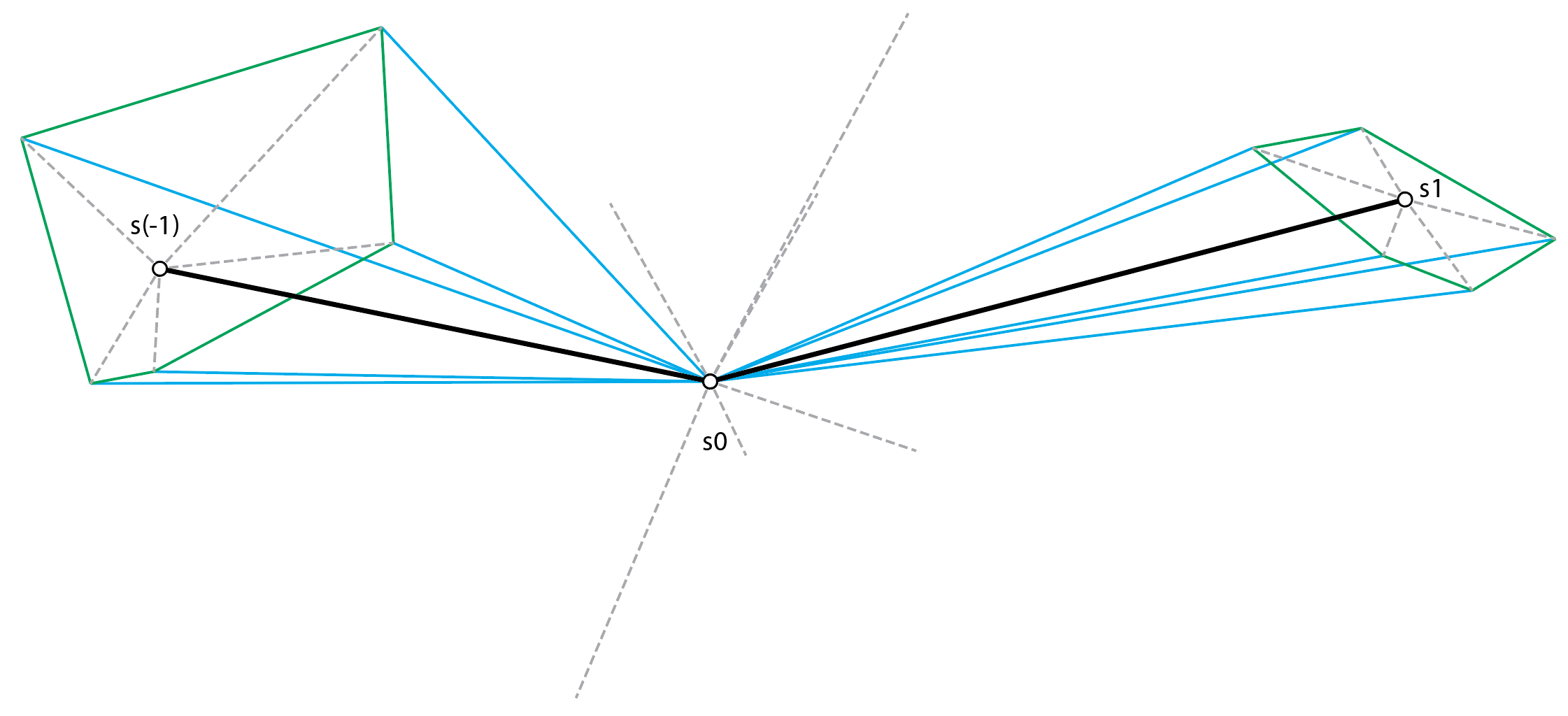
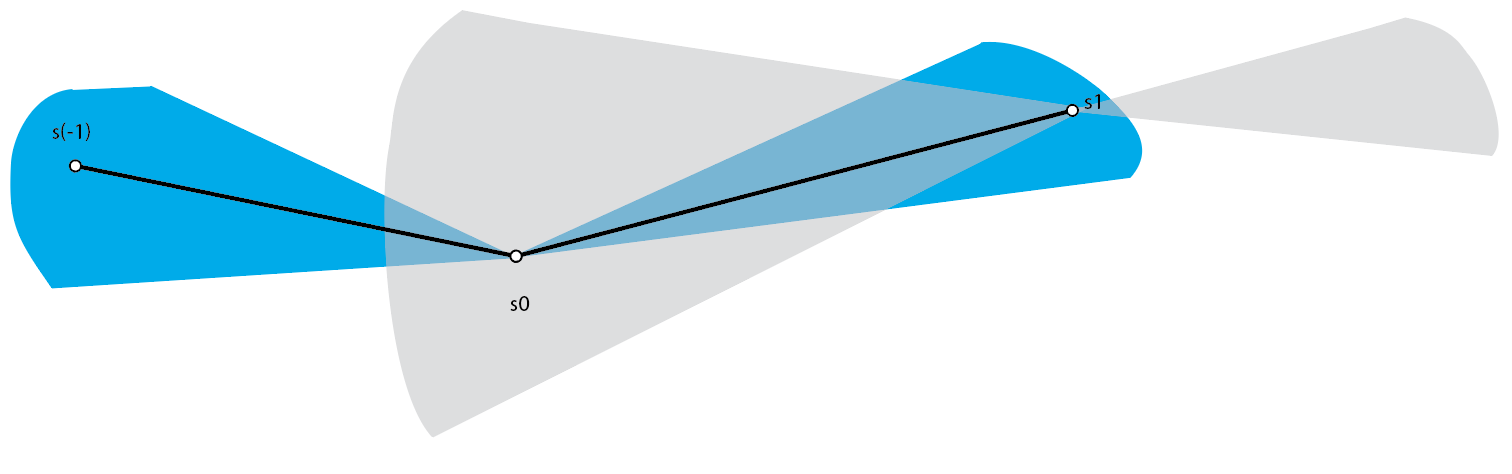
Hi Stacho, Yes I have a minimal sample. Please find it attached in a .zip file. You'll find the th and thcfg and all outputs I generated, plus some screenshots saved from Paraview and Loch. Looking at the wireframe in Paraview, I see those 'pyramid-like' connections between stations and splays. That's why I imagined that this was the method used by Loch to build the 3d volumes from splay information. I can see the intersecting pyramids in the loch visualizer too (I saved a screenshot of this in the out folder). It seems that the 3d model doesn't create a surface where the cave walls would be. To obtain that, we should generate a surface that connects the edge of two neighboring cross sections. What one can try to do is to write an algorithm that joins splays with splays and generates a tube-looking convex hull for every pair of stations. This might give a more realistic-looking result. I only know how to do this mathematica (that's the only programming language I know), and this method works over there... but I,m using a built-in ConvexHull function which is a bit of a black-box. Maybe something similar could be encoded into Loch somehow? Thank you Best, Francesco On Tue, Feb 22, 2022 at 6:30 AM Stacho Mudrak <lists@group-s.sk> wrote:
Hi Francesco,
do you have some minimal sample, where these pyramids are created?
It looks to me like a bug and I should investigate this issue. Normally - only a 3D envelope of splay shots from each station should be created. Splays from other stations should not be taken into consideration.
Thanks, S.
On Sun, 20 Feb 2022 at 23:07, Francesco Serafin < francesco.serafin2@gmail.com> wrote:
Hi,
Thank you for the very useful "volume statistics" tool!
I was wondering: how is the volume computed in Loch?
Looking at Loch-generated models in Paraview, it seems to me that Loch creates the volumes by joining every station to the splays radiating from the previous and next stations, creating a sequence of pyramid-like solids, like in this schematics: [image: image.png] (black=centreline shots, dashed grey=splay shots). Does each of these "pyramids" contribute to the total with its own volume? With this method, the mesh would contain intersecting volumes. To simplify, if we imagine a cone with apex at the stations, the cones intersect: [image: image.png] How does the computation of the total volume deal with the intersections of the cones? Does it somehow avoid the double-counting coming from the intersecting regions?
Thank you, Best, Francesco
On Sun, Feb 20, 2022 at 4:08 PM Tarquin Wilton-Jones via Therion < therion@speleo.sk> wrote:
"added support for cave volume calculation (Tools → Survey statistics)"
Awesome addition.
Could someone maybe explain what the difference is between 3D and LRUD envelope? I get how 3D probably works based on the rendered 3D view of the cave. But how can the LRUD thing work when I only use splays instead of LRUD? Does it just pick some particular or average splay and use it as a LRUD measurement? The results are so vastly different. Sometimes much bigger (one of my simple caves) sometimes much smaller ( a pothole).
_______________________________________________ Therion mailing list Therion@speleo.sk https://mailman.speleo.sk/listinfo/therion
_______________________________________________ Therion mailing list Therion@speleo.sk https://mailman.speleo.sk/listinfo/therion
_______________________________________________ Therion mailing list Therion@speleo.sk https://mailman.speleo.sk/listinfo/therion
participants (2)
-
 Francesco Serafin
-
 Stacho Mudrak